
High-protein, high-fibre formulation: understanding the interactions that drive product performance
Increasing protein and/or fibre content in food and beverage products creates formulation challenges that require expertise across ingredients, processing and sensory science.
Consumer demand for foods that deliver higher levels of protein and fibre continues to grow, but successful reformulation presents significant technical challenges. Improving nutritional value while maintaining taste, texture, stability and clean-label credentials requires a multidisciplinary approach.
Today, high-protein and high-fibre applications span a range of categories including dairy, beverages, bakery, snacks and ready meals as brands respond to changing consumer priorities.
High-protein products have moved beyond sports nutrition into the mainstream. Fibre is attracting renewed attention for its role in digestive health, satiety and blood sugar management (research suggests that 64% of Americans are consciously trying to consume more). And increasing use of GLP-1 therapies is creating further demand for nutrient-dense foods that deliver more protein and fibre in smaller portions. Product launches, such as Nestlé’s Vital Pursuit range, illustrate how manufacturers are responding to this emerging market.
These trends are expected to drive continued expansion of the protein-fortified and functional fibre markets for the remainder of the decade and beyond. The global protein-fortified market is projected to reach $101.6 billion by 2030, with the global soluble dietary fibres market projected to reach $16.5 billion by 2034.
Manufacturers are also looking beyond nutrition. Protein and fibre ingredients can support wider objectives such as clean-label reformulation, fat or sugar reduction, and permissible nutrition and health claims.
However, successful delivery of nutritional and commercial benefits requires a deep understanding of how ingredients behave within the wider formulation. As with many complex formulation challenges, success depends not simply on selecting the right protein or fibre source, but on understanding the underlying chemistry that determines performance during processing, storage and consumption.
What is high-protein, high-fibre formulation?
High-protein, high-fibre formulation involves developing or reformulating food and beverage products to increase protein and/or fibre content while maintaining sensory quality, processing performance and shelf-life.
Products also need to satisfy regulatory stipulations around nutritional claims. Under both EU and UK regulations, specific inclusion levels are required for food products described as ‘high fibre’ or ‘high protein’:
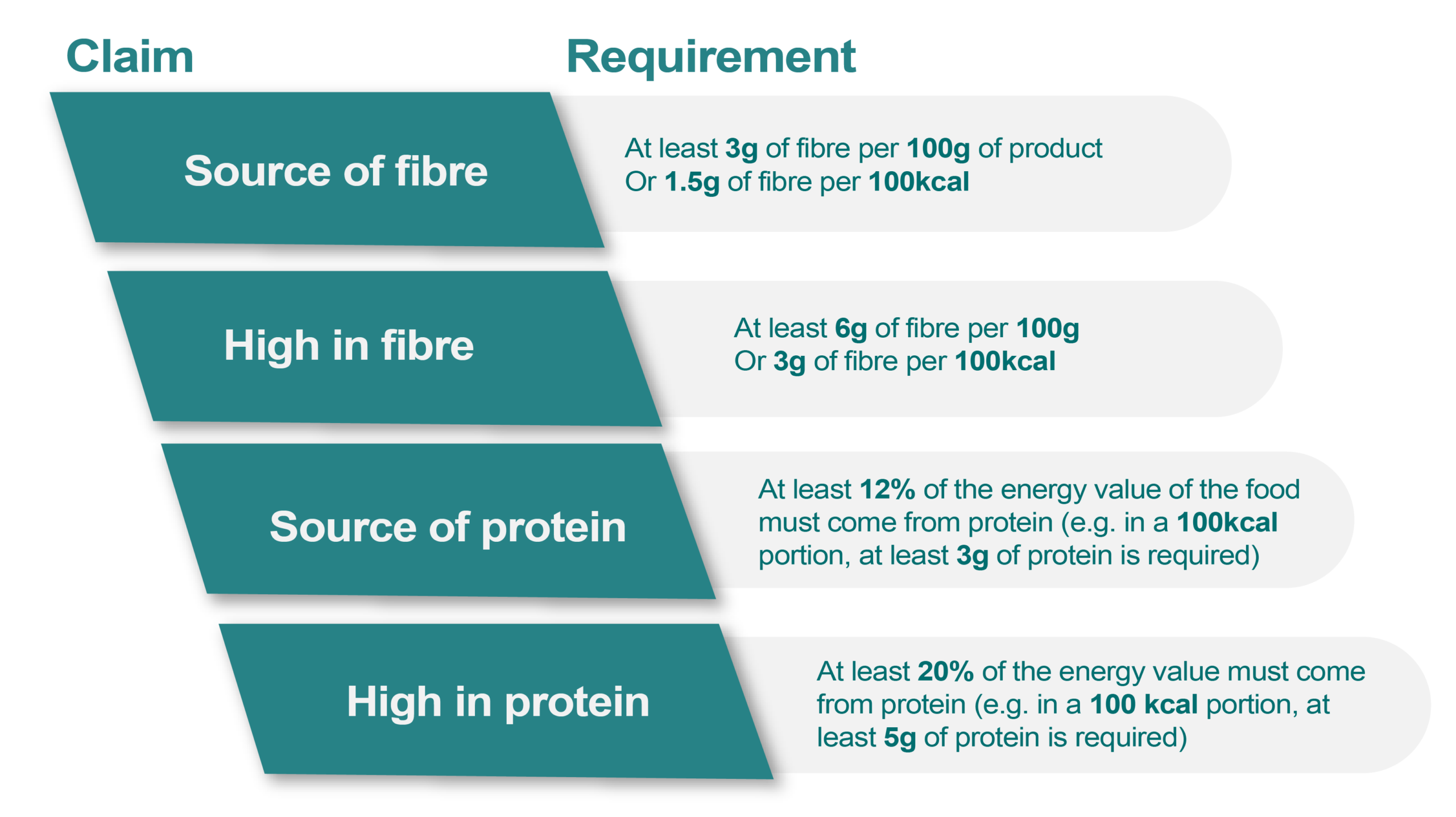
Figure 1: Protein and Fibre claim and requirement
Achieving the inclusion levels required for nutritional claims while maintaining consumer acceptance and efficient manufacture is an enduring challenge for food and beverage developers. Successful formulation must strike a careful balance between nutritional, functional and commercial considerations.
How do protein and fibre ingredients influence formulation?
Different protein and fibre sources have distinct processing behaviours, which may affect taste, texture, stability and ultimately consumer acceptance.
Fibre: functionality matters as much as quantity
Fibre can be incorporated through naturally fibre-rich ingredients such as seeds, nuts and legumes, or through purified fibre ingredients selected for specific functional properties. Soluble fibres, such as inulin and beta-glucan, generally disperse well and are suited to beverages and soft-textured products. However, insoluble fibres may introduce gritty or sandy textures.
Upcycled fibre ingredients offer attractive sustainability credentials but introduce additional formulations challenges, including variability in their composition. Extraction and purification methods also influence the physicochemical properties of fibres, affecting their functionality, nutritional performance and behaviour during processing.
Protein: sourcing is just part of the equation
Manufacturers can choose from a growing range of animal-derived, plant-based and precision-fermented proteins, offering various nutritional, functional and sustainability properties. They also present different formulation considerations.
Whey proteins remain widely used due to their excellent functionality and complete amino acid profile. Plant-based proteins also continue to gain traction but often require blending, both to achieve a complete amino acid profile and to deliver acceptable sensory performance. Precision-fermented proteins show promise, but there are still unresolved issues around cost, scale and regulatory approvals.
Processing intensity can be just as important as protein source
The level of processing a protein ingredient undergoes can impact its functionality and performance in a formulated product.
Some proteins – particularly plant-based – exhibit poor techno-functional properties (e.g. solubility) and undesirable sensory properties (e.g. off-flavours).
Because processing changes protein structure, it influences properties such as solubility, emulsification and gelling behaviour. As the below diagram shows, more intensive processing can produce ingredients with progressively higher purity, from protein-rich flours through to concentrates and isolates. However, intensive processing can also reduce functionality and create additional formulation challenges.
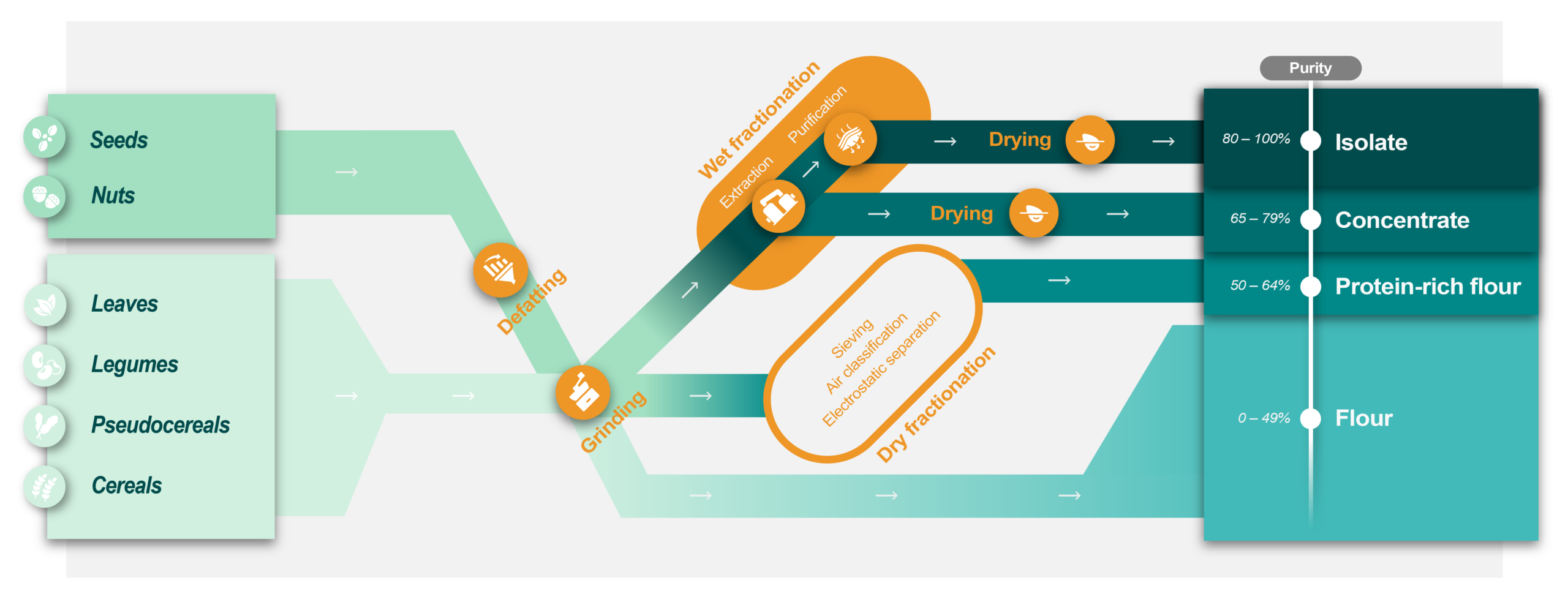
Figure 2: How processing influences the purity of protein ingredients
Three major formulation challenges
As fibre and protein levels are increased, interactions that may be negligible at low inclusion levels can become more pronounced. These effects arise from the underlying chemistry of the formulation and can influence everything from sensory performance and manufacturability to product stability and shelf-life. Understanding and addressing these interactions is often the critical step in translating promising laboratory results into products that perform reliably at commercial scale. Although the effects vary between ingredients and applications, most technical issues fall into three broad categories:
1. Unpleasant sensorial properties
Consumer acceptance is often a significant obstacle for fortified products. Fibres and proteins can introduce unpleasant sensorial properties at high concentrations.
Soluble fibres, with their high moisture-holding capacity, can affect flavour release, while insoluble fibres may result in a gritty mouthfeel especially when applied in products such as yoghurt or beverages. Off-tastes, including bitter or chalky notes, also limit consumer acceptance.
Similarly, protein fortification can lead to unpleasant flavours and a deterioration of texture due to inherent properties of the protein source or processing-induced changes.
Mitigation strategies include physical approaches such as encapsulation or coating.
One study successfully used a hydrogel coating to mask fibres’ gritty mouthfeel. Other formulation methods to improve sensorial attributes of the final product include (nano)encapsulation, flavour masking or , and targeted combinations of ingredients in the food or beverage matrix.
Protein functionalisation and modification techniques, such as microbial fermentation, enzymatic hydrolysis, or pulsed electric field (PEF) treatment can also be effective.
2. Processing challenges
Formulation problems can also emerge during product manufacture. Fortification frequently brings processing challenges such as limited protein solubility and increased fibre water-holding capacity.
Unfavourable leading to problems such as phase separation, excessive gelation, or unpleasant texture. These issues are particularly notable in plant proteins, which often exhibit poor solubility, unpleasant flavour profiles and functional instability.
Protein functionalisation techniques offer one route for Complementary formulation strategies, including the use of additives or , can further minimise unwanted properties.
Blending different protein sources, such as has proved effective in enhancing solubility, functional stability, and nutritional completeness, while fermentation can simultaneously reduce off-flavours and improve overall system performance.
3. Product stability (shelf-life) challenges
Some issues with protein- and fibre-enriched products only become apparent during storage. Shelf-life limitations can arise due to various mechanisms linked to ingredient type, production processes and the food or beverage application.
A common issue during fibre incorporation is the moisture redistribution caused by the high water-holding capacity of some fibres. This can result in a dry texture or increased hardness in baked goods and snacks. Potential mitigation strategies include blending soluble and insoluble fibre sources, production process alterations (e.g. the way dry ingredients are incorporated), and formulation optimisation.
Protein fortification can impact shelf-life due to issues linked to lipid oxidation which can lead to gelation, hardening, and protein oxidation and aggregation. Promising solutions include controlled thermal treatments and formulation optimisation using encapsulation technology, stabilisers, chelating agents, hydrocolloids or antioxidants. Protein blending and processing approaches such as hydrolysis can also improve structural stability during storage.
Why multidisciplinary approaches matter
It is important to note that these three challenge areas are interconnected, and issues in one area can trigger problems in another. For example, reduced solubility may lead to gritty texture, aggregation and reduced shelf‑life. Effective formulation optimisation often requires careful evaluation to identify and apply the appropriate combination of complementary solutions.
Developing high-protein, high-fibre products requires a deep understanding of ingredient interactions and processing technologies to meet nutritional targets without compromising consumer acceptance or manufacturing performance.
How can Sagentia Innovation help?
Developing successful high-protein and high-fibre products requires more than selecting the right ingredients. Proteins, fibres, processing conditions and product matrices interact in complex ways, creating challenges that can affect sensory performance, manufacturability and shelf-life.
Sagentia Innovation helps food and beverage companies understand and optimise these interactions throughout the development process. Combining expertise in food science, ingredient functionality, processing technologies, sensory science and product development, we help clients navigate the complex chemistry that sits behind successful high-protein and high-fibre products. By understanding how ingredients interact throughout processing, storage and consumption, we can identify the critical formulation decisions that influence performance, manufacturability and consumer acceptance. The result is products that deliver nutritional benefits without compromising the taste, texture and sensory experience consumers expect.
Our work includes:
- Evaluating protein and fibre ingredient technologies and their suitability for specific applications
- Investigating ingredient interactions that influence texture, flavour, stability and processing performance
- Identifying the mechanisms that drive formulation issues and developing practical mitigation strategies
- Assessing processing and protein functionalisation technologies to improve solubility, functionality and consumer acceptance
- Developing strategies to balance nutritional targets with sensory quality, shelf-life and manufacturing requirements
- Applying modelling and experimental approaches to optimise process efficiency, scale-up and production robustness
- Combining technical development with market and technology assessment to identify commercially attractive innovation opportunities
Recent projects include helping a global food manufacturer identify formulation, ingredient sourcing and processing strategies for high-protein snacks with improved texture. We have also investigated the mechanisms responsible for gelation in high-protein beverages and developed strategies to mitigate product instability during storage. Beyond formulation challenges, we have supported clients by evaluating the European protein beverage market to identify innovation opportunities and market white space, helping guide product development and investment decisions. Additional work includes assessing novel processing technologies to enhance perceptions of freshness in shelf-stable foods and using process modelling to identify opportunities to improve efficiency and reduce waste on established production lines.
Together, these projects demonstrate the value of combining ingredient science, processing expertise and commercial insight to support the development of differentiated, scalable food and beverage products.
Protein and fibres formulation FAQ’s:
Why is formulating high-protein and high-fibre products challenging?
Increasing protein or fibre content can significantly alter how a product behaves during processing, storage and consumption. Common challenges include reduced solubility, texture defects, off-flavours, moisture management issues and reduced shelf-life. Formulation success depends on understanding and managing interactions between ingredients, processing conditions and the wider product matrix.
How do fibre ingredients affect food and beverage formulations?
Different fibre types provide different functional properties. Soluble fibres can improve viscosity, mouthfeel and nutritional value, while insoluble fibres may contribute bulk and digestive health benefits. However, fibres can also affect flavour release, water management, texture and processability, particularly at higher inclusion levels.
What are the main challenges associated with protein fortification?
Protein fortification can introduce issues such as poor solubility, grittiness, gelation, phase separation and undesirable flavours. The extent of these challenges depends on the protein source, level of processing and the final application. Effective solutions often involve ingredient selection, protein modification, blending strategies and process optimisation.
Are plant-based proteins more difficult to formulate than dairy proteins?
Plant-based proteins often present additional formulation challenges because they can exhibit lower solubility, stronger off-flavour profiles and less favourable functional properties than dairy proteins. However, advances in ingredient processing, blending approaches and protein functionalisation techniques are helping manufacturers improve performance across many applications.
How does processing influence protein functionality?
Processing can alter protein structure, affecting properties such as solubility, emulsification, water binding and gel formation. While more intensive processing can increase protein purity, it may also reduce certain functional properties. Selecting the appropriate ingredient format and processing approach is therefore an important part of successful product development.
How can manufacturers improve the shelf-life of protein- and fibre-enriched products?
Shelf-life challenges often result from moisture migration, ingredient interactions, oxidation or structural changes during storage. Potential solutions include formulation optimisation, ingredient blending, encapsulation technologies, antioxidant systems, stabilisers and adjustments to manufacturing processes. The most effective approach depends on the product category and ingredient system involved.
How can science and engineering accelerate high-protein, high-fibre product development?
Scientific and engineering approaches help manufacturers understand how ingredients interact within complex food systems. Combining ingredient characterisation, analytical testing, process development and sensory evaluation can reduce development risk, identify root causes of performance issues and accelerate optimisation of formulations for commercial manufacture.
Read more of our insights



December 18, 2025
Unlocking the potential of natural actives for next-generation FMCG products


May 5, 2023
As investor demands for ‘healthier’ products escalate, how can packaged food companies respond?
Delivering consumer innovation
With over 30 years' experience across consumer sectors we work alongside R&D and innovation leaders as consumer demands rapidly evolve .
R&D and advisory services
Sagentia Innovation works at the cutting edge of research and development, our work ensures that clients are brought commercially viable solutions to tackle industry challenges.
Case studies and expert insights
Explore our case studies to find out about our exciting work across the consumer sector and read our latest insights and white papers authored by our industry experts.