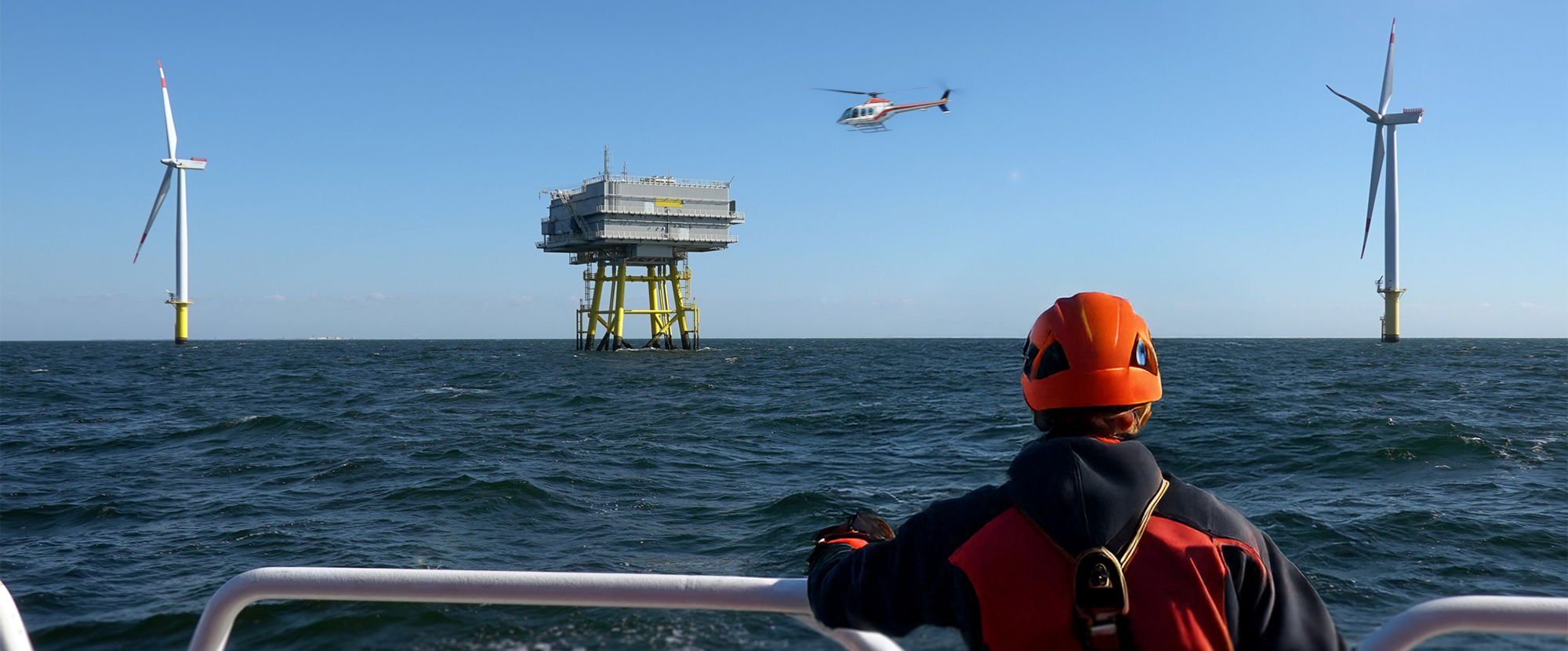
Designing onshore and offshore wind with airspace in mind
As UK wind expands into more complex airspace environments, aviation interaction becomes a core design parameter.
The growth of wind energy in the UK makes coexistence with civil and military aviation systems a necessity. Yet large turbine structures can affect everything from radar performance to navigation and airspace management.
Ambitious plans for renewable wind will lead to increasing interaction with civil air traffic corridors, helicopter operations, and airspace. If impacts are not addressed at concept stage, developers may find that mitigation is disproportionately costly and complex later. It may even result in projects being deemed unviable.
Aviation impacts need to be properly understood before significant capital is committed. Engagement with the civil aviation stakeholders, including the Civil Aviation Authority (CAA), and defence aviation stakeholders, including the Ministry of Defence (MOD) and the Military Aviation Authority (MAA), during early-stage development is key. A collaborative approach enables robust assessment and well-constructed safety cases that allow renewable deployments to accelerate without compromising air safety or national security.
Civil aviation safeguarding
The CAA’s Civil Aviation Publication (CAP 764) (Policy and Guidelines on Wind Turbines) provides a framework for assessing impacts on civil aviation infrastructure. It sets out expectations for engagement with aerodrome operators, air navigation service providers, and radar operators. It also provides the basis for evaluating potential interference with primary and secondary surveillance radar systems.
This is an important early-stage consideration for developers. Radar interaction can influence specifications for wind farms’ turbine layout, height, and configuration. Mitigation measures – such as upgrading aerodrome radar systems may also be required, bringing additional costs and potentially delaying implementation if not accounted for early enough.
Instrument Flight Procedures (IFPs) governed by CAP 785B are another safeguarding consideration. Wind turbine developments within protected surfaces associated with aircraft approach or departure may trigger the need for detailed obstacle assessment and, in some cases, revision of flight procedures. Interpreting these needs requires deep aviation expertise and any misalignment between offshore wind layout and safeguarded airspace may necessitate time-consuming redesign.
In some circumstances, developments may necessitate the CAP 1616 Airspace Change Process. This formal, multi-stage procedure is highly complex and involves defined consultation, impact analysis, and regulatory decision points. Based on aviation regulations rather than energy development timelines, effective navigation of the process demands familiarity with aviation terminology and stakeholder expectations.
Sagentia Aviation has supported major onshore and offshore wind developments through structured CAA processes, even as requirements evolve. For example, we provided strategic advice and technical assessments to inform the successful Development Consent Order (DCO) application for the Sheringham Shoal and Dudgeon Offshore Wind Farm Extension Project. And when CAP 1616 Issue 4 transitioned to CAP 1616h, we enabled Berwick Bank Wind Farm’s seamless adaptation to the new requirements.
Harnessing specialist aviation expertise from the design phase onwards helps ensure timely, proportionate assessments that align with regulatory expectations. This reduces the risk of late-stage redesign requirements that delay implementation and escalate costs.
Defence aviation and national security considerations
Civil aviation impacts can often be mitigated through procedural solutions, but defence aviation brings challenges of a different nature.
Take communication, navigation, and surveillance (CNS) systems. In a civil context, if these systems are affected by wind developments, mitigation might include the designation of a Transponder Mandatory Zone (TMZ). Put simply, this enables air traffic control to maintain aircraft visibility despite radar interference caused by turbines.
Military aviation is fundamentally different, as a potential threat aircraft doesn’t routinely broadcast position data. Air defence radar systems must detect and classify objects independently, including potential threats. Large offshore wind arrays can create radar clutter, shadowing, or false returns that hinder system performance.
The strategic significance of this is reflected in Programme NJORD, , the MOD response to UK growth in offshore wind. As the MOD states: “Programme NJORD will provide the technical solutions required to mitigate the effects that the next generation of large-scale offshore wind farms could have on the UK’s air defence radars…Mitigation of risk must be available for the lifetime of respective wind farms – potentially 25 years.”
Wind farm developers cannot approach defence engagement in the same way as conventional planning consultations. Assessment may require capability-based evaluation rather than purely safeguarding, and timelines may be influenced by operational or security considerations. Constructive dialogue depends on understanding the operational context of military aviation systems.
A deep understanding of defence aviation requirements ensures discussions around mitigation are productive and technically robust.
Enabling coexistence through informed integration
Aviation impacts are a defining aspect of wind project viability, and they need to be a core design parameter. Both civil and defence aviation processes are highly technical, centering on safety and operational capability. The associated regulatory frameworks and standards are unlike those typically encountered in energy development. Expert interpretation is needed to translate safeguarding logic into practical design strategies.
Leveraging specialist aviation expertise allows wind farm developers to take a proactive, collaborative approach to risk management. Structured assessment, credible safety cases, and well-informed stakeholder engagement enable a smoother journey from concept to completion that avoids unexpected constraints late in the process.
Sagentia Aviation combines deep technical understanding of airspace requirements with proven expertise in the support of complex infrastructure projects. Through early engagement, rigorous assessment, and constructive dialogue with aviation stakeholders, we help developers accelerate deployment while safeguarding the integrity of UK airspace and defence capabilities.
By partnering with Sagentia Aviation, wind farm developers can move forward with confidence, knowing aviation safety and regulatory compliance are in expert hands. Together, we can achieve a balanced approach that supports UK renewable energy goals while maintaining the highest standards of aviation safety.
Aviation markets
Discover more about the technical and engineering safety-critical support our experts provide in highly regulated markets
Aviation services
Find out how Sagentia Aviation’s flexibility and breadth of services allows us to tailor our offering to meet your needs
Contact us
Would you like to talk to our team about your challenges in aviation? Complete our form and we’ll be in touch soon