Skip to content

Changing demands around water availability, quality, and protection are placing new pressures on asset owners, operators, and system integrators. For OEMs supplying these organisations, seven major trends are reshaping innovation priorities at a fundamental level. This impacts how technologies are designed, how performance is balanced against cost and efficiency, and how systems must perform under increasingly variable real-world conditions.

In this white paper we break down trends that are shaping the water sector needs and illustrate approaches OEMs can take to remain competitive through practical, engineering-led innovation.

Key trends we’re exploring:

  1. Climate resilience and the need to design for extremes
  2. Digitalisation and the shift to intelligent water systems
  3. Managing contaminants: the PFAS challenge
  4. Unlocking alternative sources to ease water scarcity
  5. Decentralised water treatment and modular infrastructure
  6. The water energy nexus and hidden demands of green solutions
  7. Circular water systems and wastewater valorisation
Fill out the form to download the whitepaper

Engineering for a changing water landscape: trends reshaping OEM priorities

"*" indicates required fields

Sagentia Innovation supports OEMs through futures and strategy, performance optimisation, applied intelligence, and systems assurance, helping leaders anticipate change, engineer measurable improvements, and deploy connected water technologies with confidence.

Explore how our industrial innovation team can support your next phase of water technology development.

Read more of our insights

Insight

How to identify, replace, detect, & remove PFAS

Insight

3 things the water sector must do to have innovation impact

Case study

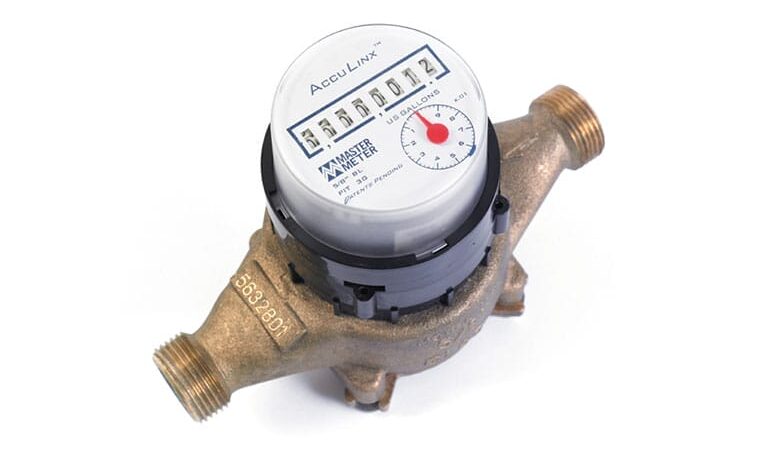
AccuLinx – Master Meter

Key considerations reshaping OEM priorities in the water sector for OEM’s:

What are the key trends shaping water technology for OEMs?
The water sector is being reshaped by several major trends: climate resilience, digitalisation, PFAS regulation, alternative water sources, decentralised treatment, the water–energy nexus, and circular water systems. These trends are redefining how OEMs design, deliver, and optimise water technologies.
How can we design water systems that perform under extreme and unpredictable conditions?

Climate volatility is exposing the limits of legacy infrastructure. OEMs need to design systems that can handle fluctuating flows, higher contaminant loads, and extreme weather events while maintaining reliability and performance.

How do we modernise ageing water infrastructure without excessive cost?

Retrofitting with modular, upgrade-friendly technologies allows OEMs to extend asset life while improving performance, avoiding the need for full system replacement.

How do we move from hardware-only products to intelligent water solutions?

Value is shifting from standalone equipment to integrated systems combining sensors, data platforms, and analytics. OEMs must design solutions that generate actionable insights, not just physical outputs.

What technologies actually work for PFAS removal and destruction at scale?
While solutions like activated carbon and ozonation are widely used, emerging technologies such as advanced oxidation and plasma processes may offer more complete destruction—but come with scalability and cost challenges.
How can we design systems that work with variable water sources?

Alternative sources like desalination and water reuse introduce fluctuating input conditions. Systems must perform consistently despite changes in salinity, contaminants, and quality.

Should we move towards decentralised water treatment models?
Decentralised systems offer flexibility and faster deployment, but introduce challenges in maintaining consistent performance and integrating multiple distributed units.
What technologies enable scalable circular water solutions?

Advanced filtration, membrane systems, and integrated monitoring platforms are essential to support safe, repeatable reuse and resource recovery.