Defence in 2026: readiness is the defining priority
With the pace and complexity of modern threats reshaping defence sector priorities, Sagentia Defence’s Tom Rasmussen says accelerating innovation to improve warfighter readiness is a unifying theme.
Since its publication in June 2025, the Strategic Defence Review (SDR) has steadily gathered momentum, and it is transforming sector priorities for 2026. The emphasis on warfighter readiness is driving a wider push to improve and accelerate innovation across the systems and technologies that underpin operational advantage.
The need to deliver relevant capability faster, more reliably, and with greater operational flexibility is front of mind for defence leaders. As MOD investment increases, there are higher expectations around outcomes and returns. Today, the focus is shifting beyond what to innovate to also encompass how innovation can be deployed more quickly and integrated more effectively.
Many trends emerging across distributed systems, sovereign capability, and science and technology reflect the urgent need to strengthen defence capabilities. Achieving this demands different ways of thinking and working as well as expert application of a wide range of skills and knowledge.
Integration as a critical enabler
One major trend is the move towards a more disseminated equipment base of lower-cost, higher volume systems. This brings a particular set of requirements and challenges, with integration at the core.
To realise the benefits of distributed capability, the underlying infrastructure must be joined up and managed in a coherent and resilient way. When capability is dispersed across multiple platforms with different roles, sizes, and levels of sophistication, operational advantage depends less on individual performance and more on how reliably those systems work together. Effective integration of distributed systems requires well-designed architectures and assured communication pathways so assets can act as a unified whole.
The SDR’s integrated force concept which aims to make the British Army, Royal Navy, Royal Air Force, and the Cyber & Specialist Operations Command (CSOC) ‘more lethal than the sum of their parts’ underlines this need. Effective systems integration will play a fundamental role in the Digital Targeting Web which aims to link UK weapons systems for faster, data-driven decision making. It’s also central to the new Cyber and Electromagnetic (CyberEM) Command. Driving progress in these domains will demand deep technology expertise, stronger resilience measures, and the ability to respond quickly to emerging threats.
Sovereign capability and industrial resilience
The onshoring trend puts growing emphasis on sovereign capability and reinforces the need to accelerate innovation. Defence leaders must be confident that critical assets, technologies, and skills will be available when required. This is driving significant new investment in domestic industrial capacity and opening the door to sector entrants with non-defence technologies or novel manufacturing approaches. Yet the long-term implications must not be underestimated. Deciding what to onshore, how far to diversify supply chains, and where to build strategic depth calls for rigorous analysis and evidence-based judgement.
A key element of this shift is industrial mobilisation. The Defence Industrial Strategy (DIS) outlines plans to grow the UK industrial base, strengthen domestic manufacturing, and move towards ‘always on’ production of munitions. These steps are designed to support sovereignty, operational advantage, and freedom of action under the SDR ambition of innovating and responding at wartime pace.
The investment and long-term planning necessary for this initiative is equivalent in scale and complexity to a major platform programme. Decisions about new technologies, suppliers, and facilities must be backed up with robust assessments of operational need, whole-life cost analysis, and a clear understanding of performance assumptions and risks. Stronger industrial resilience must be grounded in a realistic view of future operating requirements and the enduring costs of sustaining sovereign capabilities.
Accelerating capability delivery
Both the SDR and the DIS acknowledge the need for innovation to reach the frontline faster, calling for procurement reform and a wartime pace of delivery. This reflects a broader innovation challenge; capabilities are only valuable when they can be iterated and implemented quickly enough to make a difference.
There is a clear intent to accelerate technology maturation, shorten delivery cycles, and convert promising ideas into operational advantage more quickly. We looked at how to enable this within established defence procurement frameworks using techniques such as spiral development in a previous post.
Real-world examples of an agile innovation mindset are already emerging. A minimum viable product (MVP) for the Digital Targeting Web is expected in 2026, indicating the adoption of development techniques more commonly seen in the commercial technology sector.
Whilst rapid, agile development is key, the ability to identify technologies that are relevant and mature enough to progress is also essential. Earlier and more rigorous selection of promising concepts is needed across novel non-defence breakthroughs and existing commercial technologies with dual-use potential. Expert assessment ensures significant investment is only made if technologies are suited to the specific operating constraints and requirements of defence applications. Concepts can then progress through technology readiness levels (TRLs) with robust testing and validation, reducing friction between experimentation and real-world adoption.
Maximising defence innovation
Collectively, these trends show a sector determined to strengthen capabilities at pace. Integration enables distributed systems to operate as a coherent force. Sovereign capability and industrial resilience bring confidence that assets and technologies can be accessed and scaled when needed. And accelerating capability delivery ensures innovation can be deployed, iterated, and improved in line with the rapidly evolving demands of modern operations.
All of this supports the sector’s resolve to deliver the right capabilities in the right way at the right time to enable warfighter readiness. In 2026, the true measure of progress will be the degree to which innovation translates into assured, interoperable capabilities that enhance operations where it matters most.
How can Sagentia Defence help?
Effective innovation strategies increasingly depend on bridging the gap between defence and industry. Sagentia Defence enables this, combining experience in the navigation of MOD procurement with expertise in operational analysis, programme delivery, technology creation and product development.
We work with defence organisations to accelerate innovation by addressing constraints and through the identification, evaluation, and development of technologies that make a material difference to defence capabilities.
Examples of our work range from support of the Multi Domain Integrated Systems (MDIS) Defence Game Changer Programme to the exploration of Beyond Generation After Next technologies for the Defence Science and Technology Laboratory (Dstl) Defence Science and Technology Futures Programme.
To discuss how we can support your innovation journey, contact us here.
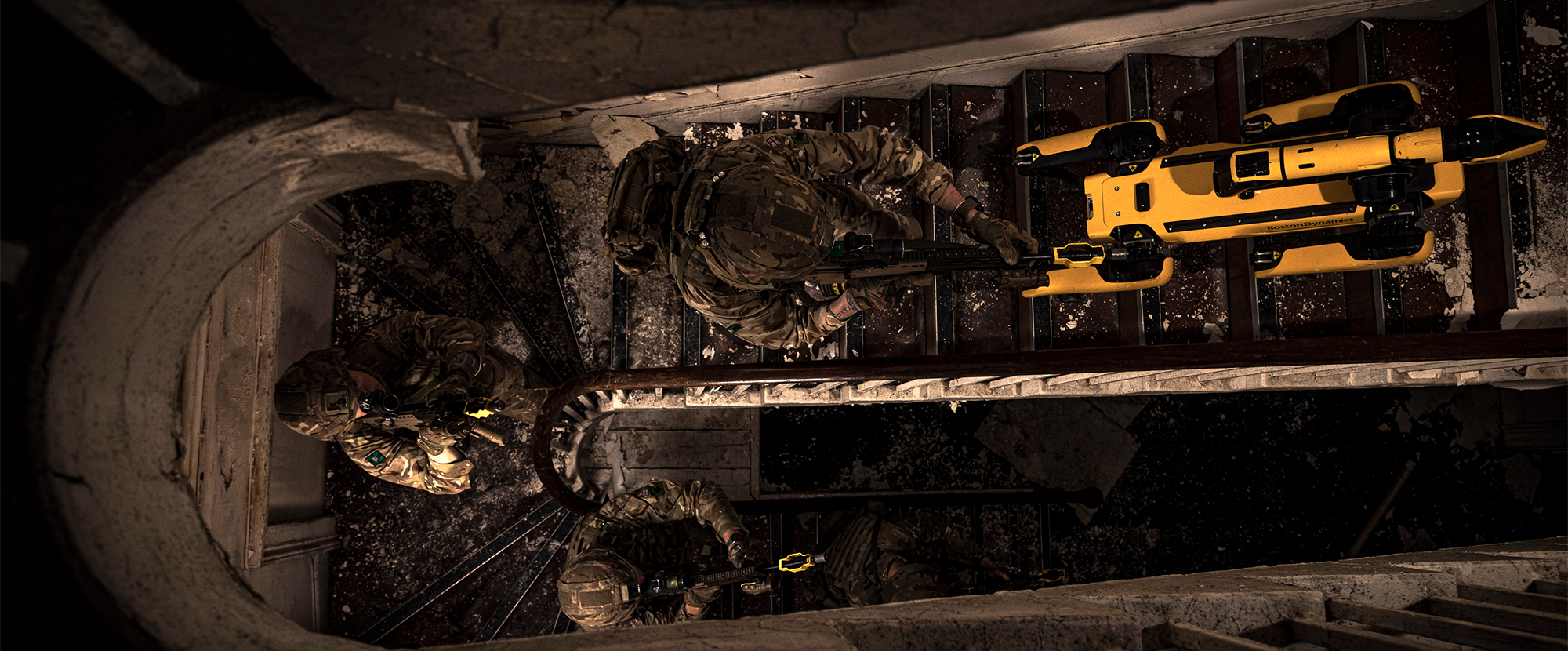
Image MOD © Crown copyright
Defence markets
Discover more about our collaborations across the defence market to navigate challenges around capability, decision making and technology
Defence services
Find out about Sagentia Defence’s comprehensive suite of services, tailored to support the defence sector as a trusted partner
Contact us
Would you like to talk to our team about your challenges in defence? Complete our form and we’ll be in touch soon