IFA 2026: Six insights shaping the future of next-generation consumer technology
IFA 2026 showcased an industry advancing rapidly across AI, robotics, connected products and automation. Technical capability has never been more impressive. Humanoid robots navigated crowded exhibition halls, appliances recognised food and fabrics, connected ecosystems coordinated activity across multiple devices, and AI appeared in almost every category. Yet the most significant insight from the event was not the technologies themselves. It was the growing gap between technological capability and demonstrated consumer value.
Across the exhibition, manufacturers showcased increasingly sophisticated solutions and a remarkable ability to bring new technologies to market. However, the most compelling innovations were not necessarily the most technically advanced. They were the ones that solved a clearly defined problem, reduced effort in everyday life or delivered a benefit that consumers could readily understand. While the themes explored below span very different categories, from robotics and home appliances to mobility and pet care, they all point towards the same conclusion. As technological capabilities become increasingly accessible, competitive advantage will depend less on the technology itself and more on how effectively science, engineering and consumer understanding are combined to address genuine consumer needs.
1. AI capabilities are advancing, but adoption must be guided by clear consumer value
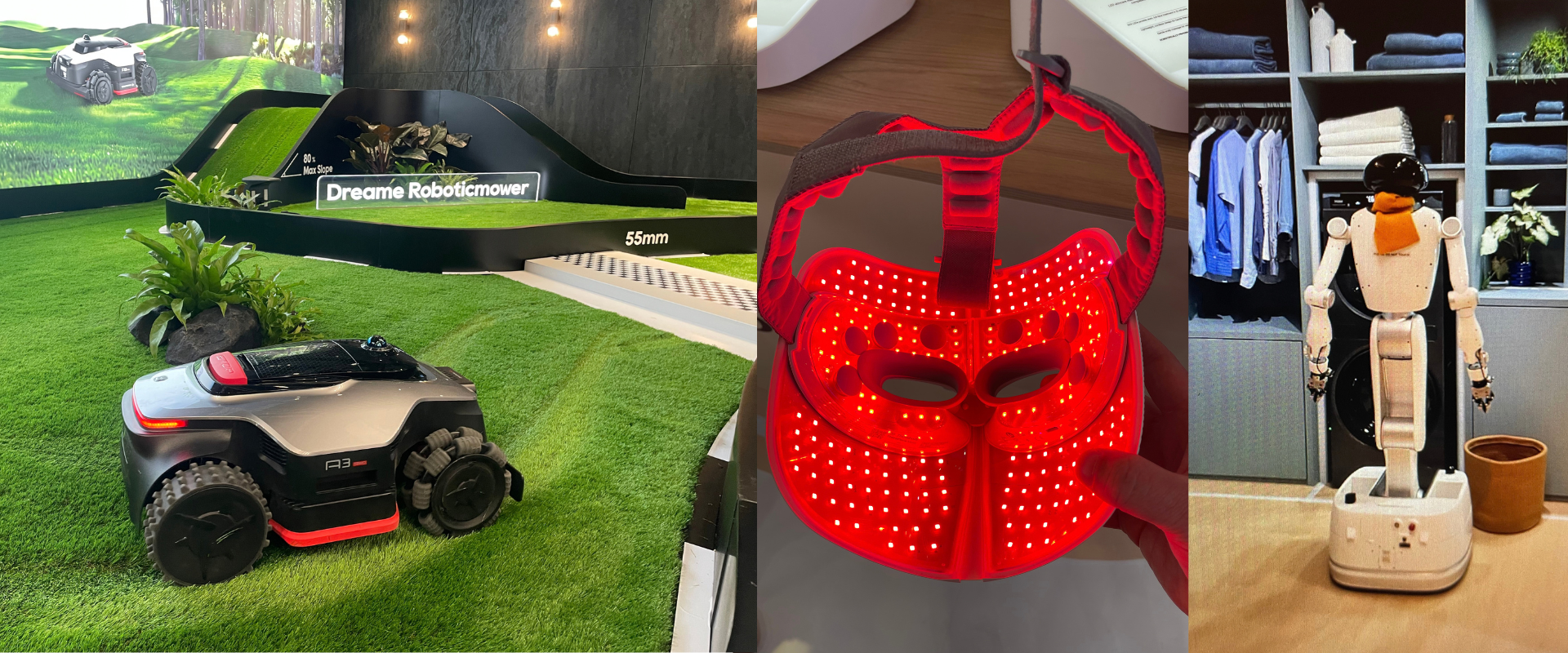
AI was impossible to avoid at IFA 2026. It appeared across almost every category, from refrigerators claiming enhanced food preservation and washing machines capable of recognising fabric types, through to connected appliances that adapt operating cycles automatically based on usage patterns. At the same time, physical AI was becoming increasingly visible. Humanoid robots shared exhibition space with quadrupeds, domestic robots and task-specific systems, all demonstrating advances in sensing, navigation and autonomous operation. The pace of progress was impressive and highlighted how quickly AI is moving from a standalone technology to an embedded capability across consumer products.
What became apparent, however, was that technical capability is no longer the primary challenge. The industry is proving it can build increasingly sophisticated AI systems. The more difficult question is whether those systems create meaningful value for consumers. Humanoid robots provide a useful example. While a human form appears intuitive in environments designed around people, it also introduces significant complexity, cost and safety considerations. In many domestic settings, including homes with children, pets, stairs and confined spaces, a wheeled platform, quadruped or task-specific solution may provide a more effective outcome. This illustrates why a first-principles approach is important: starting with the required outcome, operating environment and constraints before determining the most appropriate combination of sensing, intelligence, mechanics and interaction. Similar questions emerged across appliance categories, where AI was frequently positioned as the driver of improved food preservation, cleaning performance or energy efficiency, yet evidence supporting these benefits was often less visible than the technology itself. As AI becomes a baseline expectation rather than a differentiator, competitive advantage will increasingly depend on demonstrating distinctive outcomes that consumers understand, trust and value.
2. Innovation is shifting from standalone breakthroughs towards continuous, integrated advances
There were relatively few entirely new consumer product categories on display. Instead, innovation was increasingly focused on enhancing established platforms through better sensing, greater automation and more effective integration of technologies. This was particularly evident in home appliances and domestic robotics. Robot lawnmowers demonstrated improved edge-cutting performance and navigation, floor-care products incorporated increasingly sophisticated maintenance stations and specialised cleaning mechanisms, and ovens combined cameras, sensors and software to monitor food during cooking. Exoskeletons were lighter, more wearable and better integrated into everyday use cases than many previous generations.
This trend should not be interpreted as a slowdown in innovation. Rather, it reflects a shift towards solving more complex engineering and user experience challenges. Creating a new technology demonstration is one thing; making that technology reliable, affordable and genuinely useful in everyday life is another. Many of the developments at IFA focused on refining the ownership experience, improving performance under real-world conditions and reducing friction for users. The industry’s attention appears to be moving beyond proving that technology works towards demonstrating that it can deliver consistent value at scale.
3. As connected ecosystems expand, interoperability is becoming a critical barrier to consumer value
The vision of the smart home continues to evolve beyond individual products connected through standalone applications. Increasingly, manufacturers presented appliances, sensors, energy systems and digital services as components of broader ecosystems capable of understanding context, anticipating needs and coordinating actions across multiple devices. The ambition is clear: create connected environments that reduce complexity and automate routine household tasks. Rather than controlling products individually, consumers would interact with systems that understand what is happening in the home and respond accordingly.
The opportunity is significant, but delivering this vision presents substantial challenges. Products must decide what information should be shared, how conflicting inputs are resolved and when autonomous action is appropriate. Consumers must also retain visibility and control over system behaviour, particularly as decision-making becomes increasingly automated. Interoperability emerged as a particularly important consideration. The value of connected ecosystems will ultimately depend on how effectively products from different manufacturers work together. Without greater compatibility, consumers face fragmented experiences, multiple applications and uncertainty about which products can integrate effectively into their homes. The challenge is no longer simply connecting devices. It is creating coordinated experiences that are intuitive, transparent and sufficiently flexible to evolve over time.
4. Intelligent products are becoming more capable of managing their own maintenance
Across multiple categories, products were becoming increasingly capable of managing aspects of their own maintenance. Automated cleaning stations were a prominent feature of floor-care products, while appliances increasingly offered maintenance alerts, diagnostics and replenishment reminders. These capabilities have clear benefits. By reducing the effort required to maintain products, manufacturers can improve convenience, sustain performance and potentially extend useful operating life.
However, the emphasis on self-maintenance also raises broader questions about product longevity. There appeared to be considerably less focus on repairability, upgradeability and refurbishment than on automating aspects of ownership. As products become more dependent on sensors, connectivity and AI-driven functionality, manufacturers must consider whether additional complexity introduces new points of failure. Improving energy efficiency during use remains important, particularly in European markets, but it represents only one aspect of long-term value. Product developers increasingly need to think about the complete ownership experience, from installation and maintenance through to repair, software updates and end-of-life management. Products that require less attention are valuable. Products that remain useful, supportable and repairable for longer may ultimately be more valuable still.
5. Context-aware sensing is becoming a critical source of product differentiation
One of the clearest observations from IFA was that consumers are not a homogeneous group. Homes differ in size and layout. Household structures continue to evolve. Energy costs vary significantly by geography, while attitudes towards privacy, automation and technology adoption differ between individuals and cultures. As products become more intelligent and capable, success will increasingly depend on how well they accommodate these realities. The pet care category provided an interesting illustration of this challenge. Many products focused on automating routine activities such as feeding, watering, grooming and litter management. While technically impressive, it was not always clear that consumers necessarily wanted every aspect of pet ownership automated.
Caring for pets often forms part of the emotional relationship between owner and animal. Some of the more compelling examples therefore focused less on task automation and more on using sensors, cameras and behavioural monitoring to provide insights into pet wellbeing. Smart litter trays that monitored weight and activity, connected feeding systems and products capable of tracking behavioural changes pointed towards a future in which technology supports decision-making rather than simply replacing human involvement. The companies most likely to achieve sustainable differentiation will be those that understand where intelligence creates value, where it does not, and how products fit into the realities of everyday life.
6. Healthy ageing is emerging as one of the most important drivers of consumer technology innovation
While much of IFA focused on home technology, one of the most compelling themes was the growing emphasis on supporting mobility, recovery and healthy ageing. Demographic change is creating new challenges for healthcare systems, families and individuals, and manufacturers are increasingly responding with technologies designed to help people maintain independence and physical capability for longer. What was particularly notable was the shift in positioning. Technologies that may once have been framed primarily around disability support are increasingly being presented as tools that enable active, independent living throughout later life.
Exoskeletons were among the most visible examples of this trend. Solutions have evolved beyond knee support to include assistance for hips, backs and shoulders, reflecting a broader approach to mobility support and physical augmentation. Recovery technologies were also prominent, including thermal therapies, rehabilitation devices and systems designed to support performance and recovery. Unlike some of the more technology-led innovations elsewhere at the show, these products were generally linked to clear consumer needs and identifiable societal trends. Their value proposition was easier to understand because the problems they address are tangible. As populations age across many markets, technologies that support independence, mobility and quality of life are likely to become an increasingly important area of innovation.
What this means for innovation leaders
Taken together, these six themes point to a broader shift in consumer technology. The industry’s ability to develop and deploy advanced technologies continues to accelerate. AI, robotics, sensing and connectivity are becoming more capable, more affordable and more widely available. Yet as these capabilities become increasingly accessible, they also become harder to differentiate through technology alone. The challenge for innovation leaders is therefore changing.
Competitive advantage will depend less on demonstrating what technology can do and more on identifying where technology creates meaningful value for consumers. This requires a deeper understanding of consumer needs, stronger evidence linking technology to outcomes and greater focus on the complete ownership experience rather than isolated product features. The most convincing innovations at IFA were not necessarily the most technologically sophisticated. They were the ones that reduced friction, supported independence, addressed a clear unmet need or improved quality of life in a way that consumers could readily adopt. As technology capability becomes easier to replicate, consumer understanding may become the more durable source of competitive advantage
How we can help
At Sagentia Innovation, we help organisations translate emerging technologies into products, services and experiences that create measurable value for consumers and businesses. By combining consumer insight, human factors, science, engineering and commercial understanding, we help clients identify where technology can address genuine needs, evaluate opportunities, generate evidence and develop products that succeed in real-world conditions.
Sagentia Innovation case studies and insights




March 25, 2021
How can we leverage wearable technology to strengthen our brand in health and wellness?

Key Takeaways from IFA 2026
- AI is becoming a baseline capability across consumer products.
- Consumer value matters more than technical sophistication.
- Interoperability remains a major smart home challenge.
- Self-maintaining products are becoming mainstream.
- Context-aware sensing is emerging as a key differentiator.
- Healthy ageing is creating significant innovation opportunities.
Next-generation consumer technology FAQs:
What were the biggest technology trends at IFA 2026?
The dominant themes at IFA 2026 included AI-enabled appliances, robotics, connected home ecosystems, autonomous maintenance, mobility technologies and solutions designed to support healthy ageing. While these technologies continue to advance rapidly, the most significant insight was the growing focus on demonstrating meaningful consumer value rather than technical capability alone.
How is AI changing consumer products and home appliances?
AI is increasingly being embedded into everyday products to automate tasks, optimise performance and personalise experiences. Examples at IFA 2026 included appliances that recognise food, fabrics or household routines, as well as systems that automatically adjust operation to improve energy efficiency or convenience. The challenge for manufacturers is demonstrating tangible consumer benefits rather than simply highlighting AI capabilities.
Is AI a key differentiator in consumer technology?
As AI becomes increasingly common across product categories, it is rapidly becoming a baseline expectation rather than a unique selling point. Competitive advantage is likely to depend less on whether AI is present and more on whether it delivers measurable outcomes, such as improved performance, reduced effort or a better user experience.
What role will robotics play in the future of the home?
Robotics is expected to play an increasing role in reducing household effort and automating routine tasks. However, the most effective solutions may not always be humanoid. Future success is likely to depend on selecting the right combination of sensing, intelligence and mechanical design for a specific task rather than replicating human form.
What challenges are slowing smart home adoption?
While connected ecosystems are becoming more sophisticated, interoperability remains a significant challenge. Consumers often face multiple applications, incompatible devices and uncertainty about which products can communicate effectively. Future growth will depend on creating connected experiences that are intuitive, interoperable and easy to manage
Why is healthy ageing becoming an important innovation opportunity?
Ageing populations are increasing demand for technologies that support independence, mobility and quality of life. Innovations such as exoskeletons, rehabilitation technologies and mobility assistance systems are moving beyond clinical applications and becoming more relevant to everyday consumer use, creating significant opportunities for product developers and technology companies.
How are consumer technology companies approaching sustainability?
Many manufacturers continue to focus on improving energy efficiency and reducing environmental impact during product use. However, there is growing recognition that long-term sustainability also depends on repairability, upgradeability, product longevity and end-of-life considerations. Future innovation is likely to place greater emphasis on the complete product lifecycle.
What will drive competitive advantage in consumer technology over the next decade?
As technologies such as AI, robotics and connectivity become more accessible, sustainable differentiation is likely to come from a deeper understanding of consumer needs. Organisations that can identify genuine problems, generate evidence of value and create products that fit naturally into everyday life are likely to achieve stronger long-term competitive advantage.
Delivering consumer innovation
With over 30 years' experience across consumer sectors we work alongside R&D and innovation leaders as consumer demands rapidly evolve .
R&D and advisory services
Sagentia Innovation works at the cutting edge of research and development, our work ensures that clients are brought commercially viable solutions to tackle industry challenges.
Case studies and expert insights
Explore our case studies to find out about our exciting work across the consumer sector and read our latest insights and white papers authored by our industry experts.