In a dangerous world, novel technologies must reach the front line faster
Today, defence innovation demands collaboration, experimentation, and a willingness to fail fast so novel technology can develop at pace. As threat levels escalate, playing it safe could be the biggest risk of all.
Rapid development of groundbreaking technologies is critical in the current defence landscape. Yet the Strategic Defence Review acknowledges that meeting this need requires significant change to UK defence procurement, noting that “Defence struggles to prioritise science and technology spending and exploit innovation for operational advantage”.
According to the Defence Industrial Strategy Statement of Intent “skills, delivery times and innovation cycles need to improve and scale in order to make deterrence effective, drive better value for money and match the escalating threats”.
In this context, a ‘fail-fast, fail-safe’ innovation mindset is key. As we explained in a recent article, spiral development is emerging as a way to accelerate progress within the defence sector’s Concept, Assessment, Demonstration, Manufacture, In-Service, Disposal (CADMID) procurement framework. Each loop of the spiral must involve critical assessment of whether to kill or continue the concept, so only technologies that deliver defence benefits at a commercially viable price point proceed. This approach encourages controlled experimentation with breakthrough ideas, as lessons from failures are harnessed to inform the next iteration.
Increasingly, defence leaders also see the merit of mobilising ‘good enough’ technology quickly and at scale, an ethos already embraced as a fundamental philosophy in our non-defence markets. Recent military operations indicate that rapid, large-scale deployment of simple, cheap technologies can be more effective than advanced monolithic systems that take years to deliver. But this is a balancing act that requires sound judgement and strategic insight.
The stakes are high. Rigorous, collaborative approaches to technology identification, assessment, and development are required. Drawing on dual-use technologies and expertise from non-defence industries is key to accelerate innovation and capability deployment.
Three vital elements of novel defence technology innovation
1. Technology identification
Blend horizon scanning and non-defence market knowledge to identify promising technologies based on solid scientific principles and defence insights.
To leverage novel technologies, more defence innovation needs to start outside the sector. Many advancements in fields such as robotics, electronics, and biotechnology are emerging in organisations with no direct links to defence.
Spotting non-defence breakthroughs which might transform future capabilities requires collaboration between scientists, engineers, and experts in real-world defence challenges. Bringing these perspectives and insights together is necessary to identify the most promising early-stage technologies that could be developed for defence applications.
A structured, systematic approach makes this happen. For example, under Defence Science and Technology Laboratory (Dstl) Project Alchemy, Sagentia Defence led a consortium of six companies to identify new research with game-changing potential. We devised a three-stage process that involved:
- Finding high-quality indicators of science and technology advancement from the latest academic literature, patents and non-English sources.
- Developing defence concepts from these indicators via creative workshops that included input from domain experts and military advisors.
- Maturing each concept by evaluating potential benefits to defence, and the necessary science and technology inputs to realise these benefits.
This analyst-led project combined a wide range of cross-sector skills, knowledge, and experience. The aim was to develop 15 beyond Generation After Next (bGAN) concepts rooted in early-stage research to help inform future investment decisions. Analysts interrogated the research findings for technical and defence viability. Then scientists and engineers developed and matured novel concepts for Dstl’s consideration.
2. Technology assessment
Generate new concepts and assess them for operational effectiveness, cost, safety and assurance, and technical feasibility.
Once promising technologies have been shaped into initial concepts, the next step is to fully investigate their potential for defence. This means moving from science and technology exploration to more structured evaluation.
Concepts must be assessed from multiple perspectives. In addition to operational effectiveness, costs, safety, and technical feasibility, the Defence Lines of Development (DLODs) must be considered. Science, engineering, and defence domain expertise is critical to ensure a full and robust assessment of the technologies and wider implications of their deployment.
Recent operations highlight the need to achieve a fine balance between the quantity and quality of technologies deployed. In some cases, a resilient and reactive technological base demands higher quantities of military equipment for the same spend, making cost optimisation a priority area. This can include the use of novel technologies to make existing equipment more efficient, as seen in a project for a leading defence organisation specialising in high-performance, high-value battlefield systems. Sagentia Defence was engaged to pinpoint sub-systems with potential for major cost savings, delivered through carefully managed functionality trade-offs.
We prioritised four sub-systems for detailed investigation, working alongside the client team to ensure recommendations aligned with their needs. Each investigation involved a three-pronged approach:
- Investigating commercial off the shelf (COTS) options as drop-in replacements. A Pugh matrix technique was used to compare costs and performance, allowing trade-offs to be understood.
- Deconstructing sub-systems into their underlying functional units. Then, structured ideation sessions with scientists and engineers enabled alternative technology options to be identified for each function.
- Looking at the commercial sector for alternative solutions to each function. This allowed us to propose radical, but readily available, solutions.
For each sub-system, we provided a full picture of solutions suitable for use in a defence context, ranging from COTS products to emerging novel technologies. This systematic assessment provided the necessary insights to optimise costs without compromising capabilities.
3. Technology development
Use robust processes to turn the innovation vision into reality, without compromising safety, quality, or reliability.
When developing concepts into real defence capabilities, many competing factors are at play. While the goal is to transition from ideation to deployment quickly, the necessary rigour must be retained. This is where spiral development comes to the fore. It aligns with the fail-fast, fail-safe mindset, where early testing and controlled failure enable teams to make progress, testing and refining novel technologies, and adapting to real-world feedback.
Non-defence expertise can accelerate and optimise the process, bringing new perspectives and experience in areas such as rapid prototyping, human factors, or scaling to manufacture. A recent Sagentia Defence project looking at the collection of hazardous samples for analysis benefitted from a multidisciplinary approach. A core goal was to enhance the user experience by reducing process steps, minimising touch points, and improving efficiency.
Defence specialists familiarised themselves with the existing sample collection process to understand the various use cases and user pain points. Meanwhile, our chemists and biologists – who regularly develop systems that help unskilled users collect viable specimens for medical diagnoses – began testing wicking materials as a simple, safe means of sample collection. They quickly identified a shortlist of options that satisfied targets around efficiency, compatibility, and ease of manufacturing integration.
The collaborative approach enabled rapid progress. In just eight weeks, a device prototype incorporating a novel wick and handle design was in users’ hands for field testing. This underlines the benefits of balancing user, concept, and market considerations – an ethos explored further in our Value Proposition Matrix whitepaper, available here.
From novel technology to proven capability
The 2025 Defence Industrial Strategy pledged to ringfence at least £400million per year for defence innovation and to commit 10% of equipment spend to novel technologies. These budgets must be invested with skill and purpose to ensure they deliver good returns.
Target areas highlighted under the Strategy range from autonomous systems to engineering biology to semiconductors and connectivity technologies. Innovation in these advanced technical fields demands tight integration with experts in non-defence industries. The right blend of science, engineering, and defence expertise is needed to ensure novel technologies are developed quickly and deployed effectively to counter escalating threats.
How Sagentia Defence can help
Sagentia Defence is a science and technology consultancy with over 60 years’ experience supporting decision makers within UK MOD, NATO and the defence industry. We can support the development of novel technologies, at pace, from early idea generation through to product launch (Technology Readiness Levels 1 to 9). Contact us to discuss your needs: https://sagentia.com/contact/
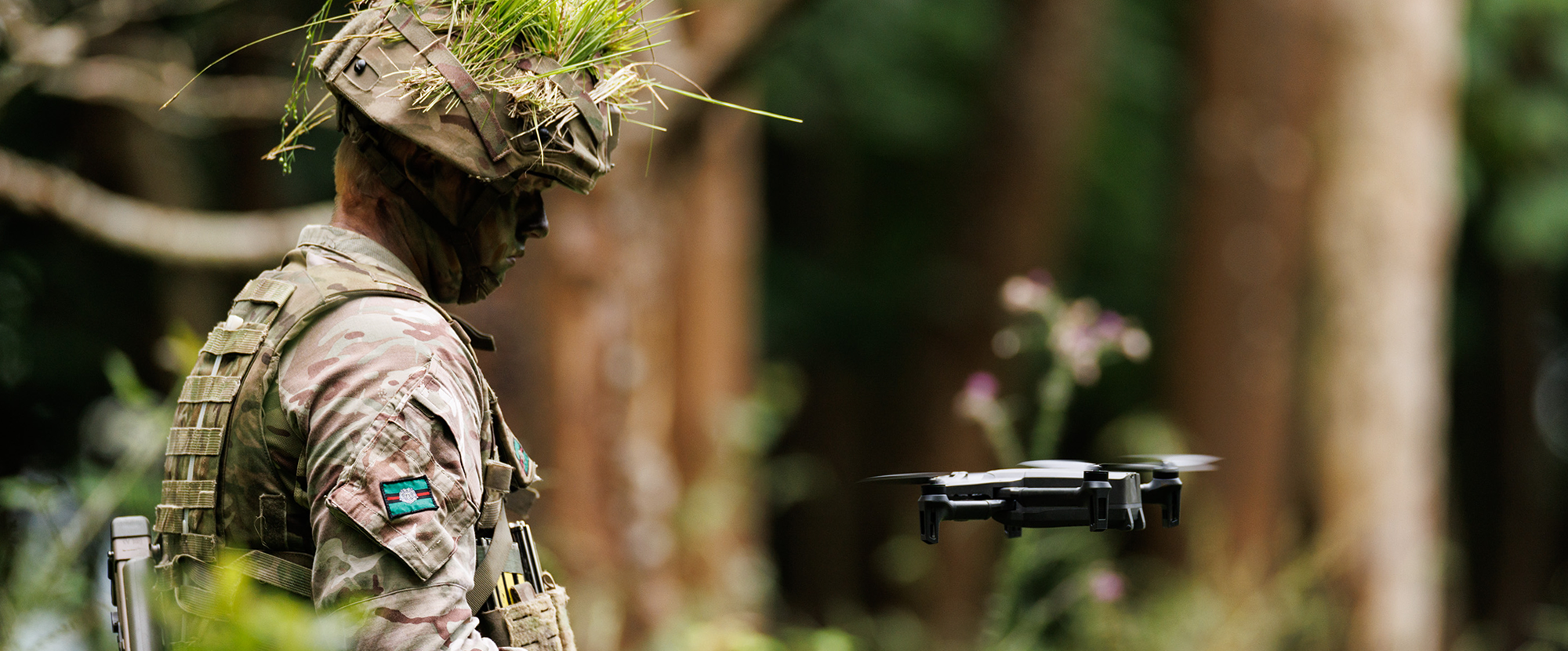
Image – UK MOD © Crown copyright
Defence markets
Discover more about our collaborations across the defence market to navigate challenges around capability, decision making and technology
Defence services
Find out about Sagentia Defence’s comprehensive suite of services, tailored to support the defence sector as a trusted partner
Contact us
Would you like to talk to our team about your challenges in defence? Complete our form and we’ll be in touch soon