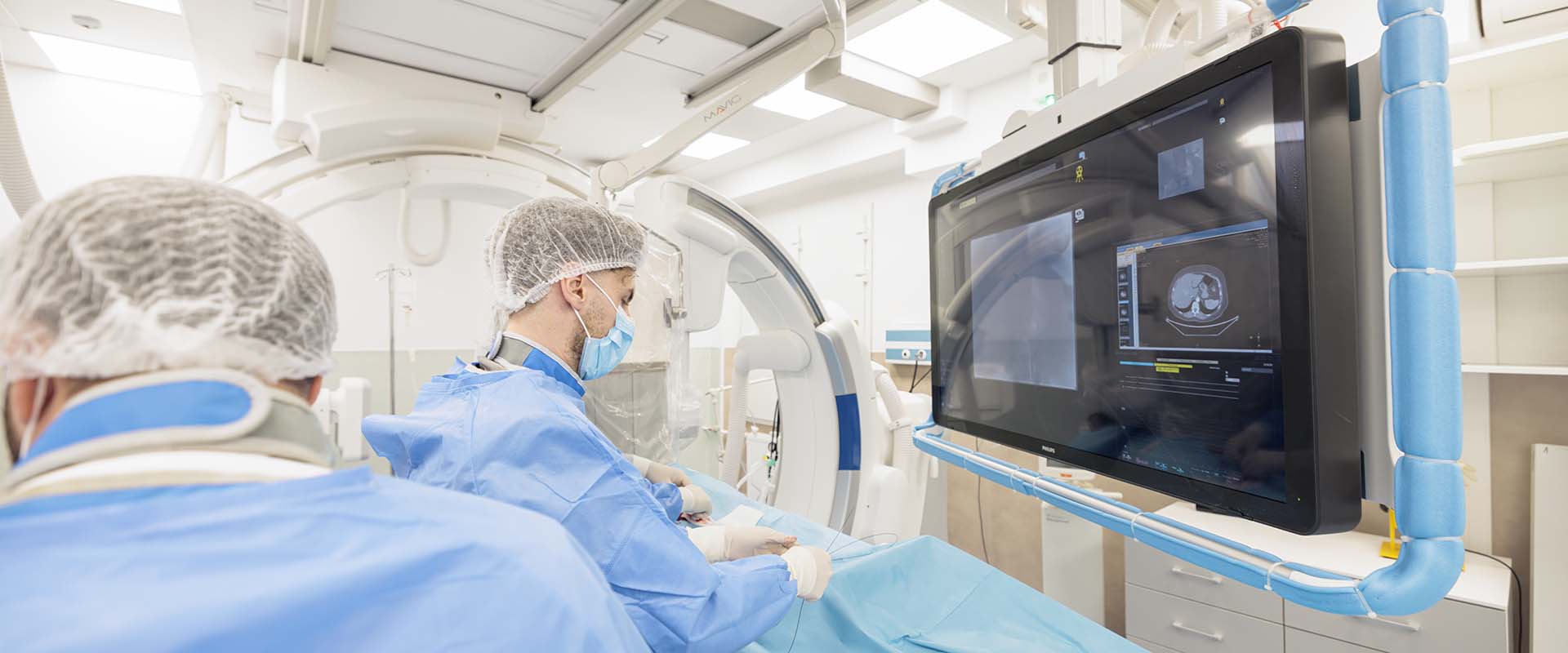
Tumour ablation in interventional oncology: where next?
Author: Rob Morgan, Partner
By 2035, many cancer patients should be receiving highly personalised local therapy planned with multimodal imaging, delivered with robotic assistance, and combined with immunotherapies tailored to tumours’ biological characteristics. Interventional Oncology (IO) is playing a central role in this evolution in cancer care.
Amongst IO’s therapeutic options, tumour ablation stands out for its flexibility, repeatability, and direct lesion destruction. This white paper reviews the principal modalities – their physical mechanisms, clinical adoption, strengths and limitations. We also examine future innovation opportunities, focusing on the integration of ablation technologies with precision treatment systems and their combination with immuno-oncology therapies.
This white paper discusses:
- Ablation of solid tumours
- Future directions in tumour ablation
- Tumour ablation – looking towards 2035
- Enabling the next generation of tumour ablation
Fill out the form to download the whitepaper
Tumour ablation in interventional oncology: where next?
"*" indicates required fields
Read more of our insights and case studies
September 14, 2026
How modelling improves the design of energy-based surgical and interventional devices


August 18, 2026
The highs and lows of turbidimetry and nephelometry for point of care immunoassays