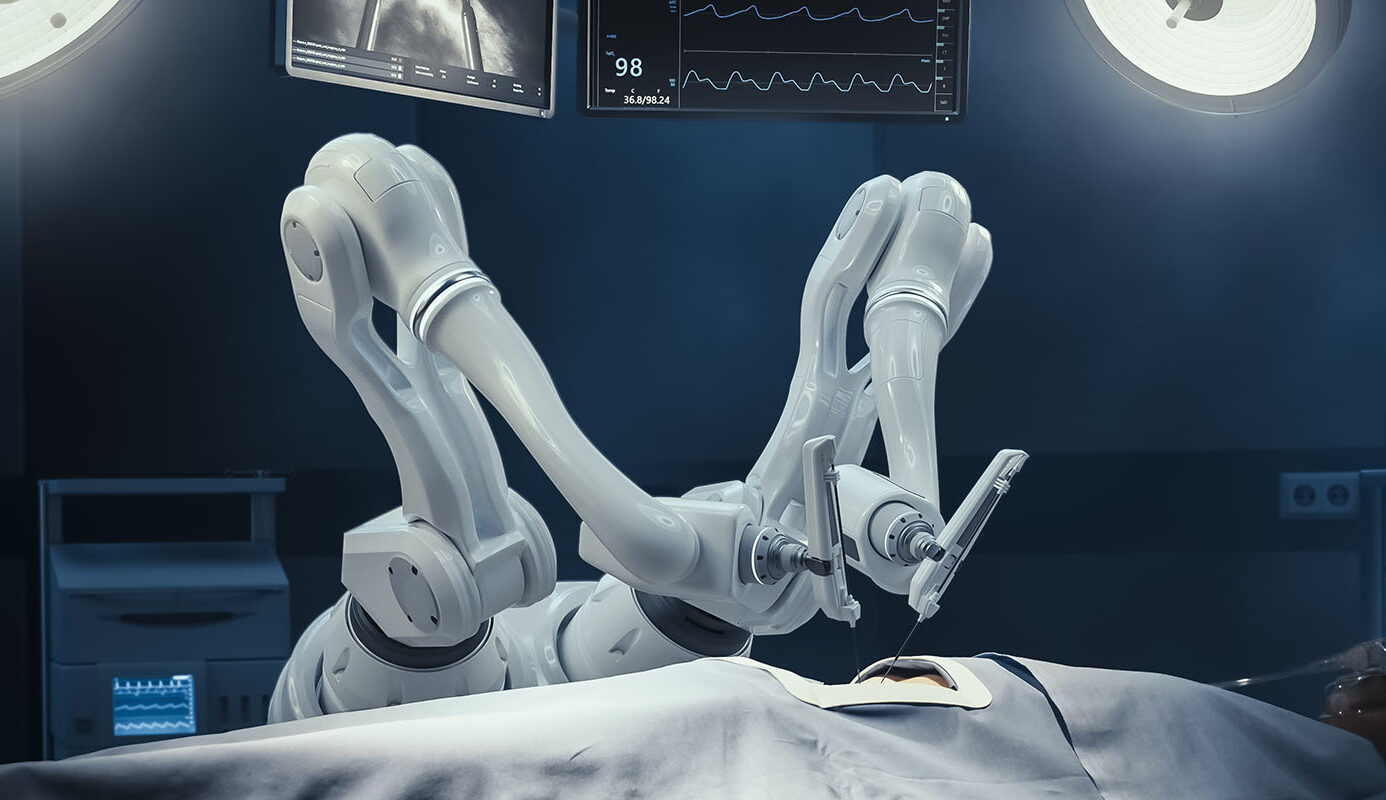
Five visions for autonomous surgical robotics
Authors: Sergio Malorni, Senior Consultant and Rob Morgan, Partner
Surgical robotics is approaching a pivotal moment. Across industries, advances in sensing, machine learning and robotics are expanding what machines can perceive, understand and execute within complex real-world environments. Yet the greatest value in surgical robotics may emerge long before robots perform entire procedures independently.
The most significant opportunities are likely to come from autonomous functions that automate repeatable, technically demanding or resource-intensive tasks while keeping clinicians firmly in control. By improving consistency, efficiency and access to expertise, these capabilities could help address some of healthcare’s most persistent challenges while building the evidence and trust needed for greater autonomy.
This paper explores five visions for autonomous surgical robotics, spanning ophthalmology, orthopaedics, laparoscopy, endovascular intervention and clinical assistance. Each vision highlights where meaningful value may first emerge, and why organisations do not need to wait for full autonomy to begin realising its benefits.
Fill out the form to download the whitepaper
Five visions for autonomous surgical robotics
"*" indicates required fields
Read more of our insights and case studies
September 14, 2026
How modelling improves the design of energy-based surgical and interventional devices



August 18, 2026
The highs and lows of turbidimetry and nephelometry for point of care immunoassays